
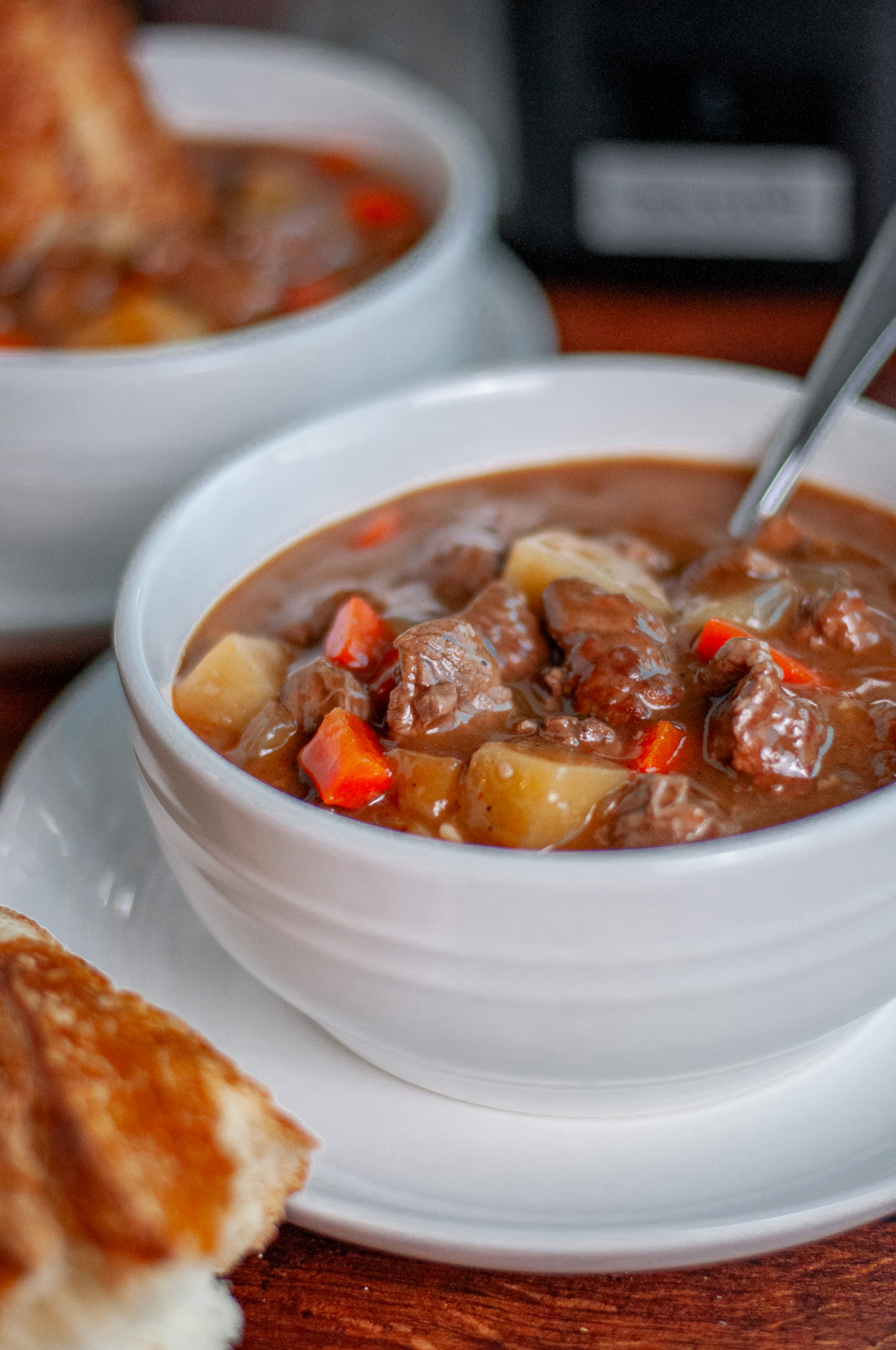
An easy beef stew in the slow cooker should taste like it took all day, and this one does (thanks to your slow cooker!). There is just a little bit of up front work required to chop your vegetables and sear the beef, and then the slow cooker does the rest while you go about your day. What you end up with is rich and hearty: tender potatoes and carrots that still hold their shape, and beef that pulls apart with a fork.

I grew up eating my grandma’s farm-style beef stew, and it was as straightforward as it gets. Meat, potatoes, and carrots. Nothing fancy, but filling and delicious every single time. This version has a little more pizazz than hers did, though not so much that she would not recognize it. I’m sure she would still enjoy a bowl of this and give me her stamp of approval.
We use our slow cooker constantly around here, and I am always working to add more of these recipes to the site as we find and test the ones worth sharing. With nearly 80 easy dinner recipes, including more than a dozen slow cooker recipes, that I’ve developed for this site, I have a good sense of what actually works on a weeknight and what just sounds good on paper. This one works.
You’ll Love This Slow Cooker Beef Stew
Mostly hands off. About ten minutes of real work up front, and then the slow cooker takes it from there. Start it in the morning and dinner will be waiting for you at the end of the day.
Deep, rich flavor from searing and deglazing. Browning the meat and getting the flavorful browned bits off the bottom of the skillet with red wine is where the flavor comes from. It is a small amount of effort for a big payoff.
Simple ingredients, nothing fussy. This is meat, potatoes, and carrots at its heart. No specialty items, no long shopping list.
Feeds a crowd and reheats well. This makes a generous pot, and leftovers are arguably better on day two.
Beef Stew Ingredients

- Yukon Gold potatoes. Cut into bite-size pieces, peeling optional. Baby Yukon golds halved or quartered work just as well. These go into the bottom of the slow cooker.
- Carrots. Peeled and cut into bite-size pieces. Cut them a little chunky so they do not disappear over a long cook time.
- Yellow onion. Diced and added right into the slow cooker along with the other vegetables. It softens over the long cook and melts into the broth.
- Neutral oil. For searing the beef. Canola, vegetable, or avocado oil all work, since you want something that holds up to high heat.
- Beef stew meat. Cut into 1 inch cubes. If yours is not precut, a chuck roast cut down yourself is the way to go. More on choosing this below.
- Garlic. Fresh minced, added to the skillet with the seared beef and cooked just until fragrant so it does not burn.
- Salt, black pepper, and celery salt. These season the beef right in the skillet. I do not use celery in this recipe, but the celery salt gives you that savory background note without any actual celery in the pot.
- Red wine. Look for a dry, medium bodied red like cabernet sauvignon, pinot noir, or merlot. Use a wine you would enjoy drinking on its own, and do not use cooking wine. There is no need for an expensive bottle, but pick something mid-range you would happily pour a glass of.
- All-purpose flour. Tossed over the beef in the skillet after deglazing. It coats each piece and thickens the stew as everything cooks.
- Beef broth. The base of the stew.
- Tomato paste. Adds richness and a little acidity that balances all that beef.
- Worcestershire sauce. Savory depth in a single tablespoon.
- Bay leaves. Added last so they sit on top, and easy to fish out at the end.
- Cornstarch. Whisked with cold water into a slurry if you want a thicker stew at the end.
Head to the recipe card at the bottom of this post for exact measurements and the full directions.
Choosing the Best Beef Stew Meat for the Slow Cooker
Chuck roast is what you want. It comes from the shoulder, which is a hard-working part of the animal, and that gives you two things a stew needs. It is well marbled, so fat runs through the meat and melts down to keep everything rich. It is also full of collagen, the connective tissue that holds muscle together. Collagen is what makes a cheap cut tough if you cook it fast, but over several low hours it breaks down into gelatin, which gives the broth its body and lets the beef pull apart with a fork. Leaner cuts like sirloin or round have neither, which is why they turn dry and stringy in a slow cooker no matter how long you give them.
I usually buy my beef stew meat from our local beef producer at the farmers market, but most grocery stores carry it too. If you are buying a package labeled stew meat, it is worth asking someone to check what cut is actually in it. It is often chuck, but some stores use whatever trim they have on hand, which can mean lean pieces that never get tender.
Buying a whole chuck roast and cubing it yourself is the other good option, and often the cheaper one. Chuck goes on sale regularly, and you know exactly what you are getting. Cut it into 1 inch cubes and trim off any big solid pieces of fat, but leave the marbling running through the meat alone. That is the good stuff.
Helpful Equipment
You need a large slow cooker and a skillet. That is really it. A 6 quart slow cooker fits this recipe comfortably, and any large skillet works for the searing step. A wooden spoon is helpful for deglazing, since you want something that can scrape the bottom of the pan without scratching it.
How to Make Beef Stew in a Slow Cooker

Start with the vegetables. Chop the potatoes, carrots, and onion and add them all to the slow cooker.

Sear the beef in batches. Heat 1-2 Tablespoons of neutral oil in a skillet over medium-high heat and sear about half the beef, browning all sides, for roughly 45 seconds per side. Do not overcrowd the pan. Transfer the first batch to a bowl and set it aside, then brown the second batch.

Place all beef and it’s juices into the pan. Return the first batch of seared pieces, and all of its juices, to the skillet with the second batch.

Add the garlic and seasonings. Stir in the garlic, salt, pepper, and celery salt and cook for another 30 seconds to a minute, until fragrant.

Deglaze the skillet. Add a splash of the red wine, about 2 to 3 tablespoons, and use a wooden spoon to scrape up all the browned bits stuck to the bottom of the pan. This is the step that makes the whole dish.

Coat the beef in flour. Sprinkle the flour over the beef and toss until all the pieces are coated.

Transfer everything to the slow cooker. Scrape the contents of the skillet, juices and all, over the vegetables.

Add the remaining ingredients. Add the rest of the red wine, the beef broth, tomato paste, and Worcestershire sauce, then gently lay the bay leaves on top.

Cover and cook (low and slow is the way to go!). Cover and cook on LOW for 7 to 8 hours (or on HIGH for 3 to 4 hours if you’re short on time), until the vegetables are softened and the potatoes are fork tender.

Thicken the sauce if desired and enjoy! I recommend this, but everyone has a different consistency preference. Remove the bay leaves then stir in the cornstarch slurry and cook another 10 minutes or so to allow the sauce to thicken (it will continue to thicken as it sits too).
How Long to Cook Beef Stew in the Crock Pot
Plan on 7 to 8 hours on LOW (my recommendation!) or 3 to 4 hours on HIGH. If you have the time, LOW is the better choice because the longer, gentler cook gives the the beef time to break down properly, which is what makes it fall-apart tender rather than just cooked through.
You are looking for potatoes that give easily when you poke them with a fork and beef that pulls apart without much effort. If the beef still feels tight, it usually needs more time rather than less. This is one of those cuts that goes from tough to tender and then back toward stringy if you really push it, so start checking around the 7 hour mark on LOW.

Variation Ideas to Try
- Add celery. I leave it out because that is not how I grew up eating it, and I find celery a little overrated. If you are a celery person, two or three ribs chopped and added with the potatoes and carrots will fit right in.
- Stir in peas at the end. A cup of frozen peas added in the last 15 minutes adds color and a little sweetness without turning to mush.
- Swap in different root vegetables. Parsnips, turnips, or sweet potatoes all work in place of some of the potatoes if you want to get wild with it.
- Add mushrooms. Sliced cremini, portabella, or shitake mushrooms browned in the skillet after the beef bring another layer of savory flavor. Add them to the slow cooker along with everything else from the pan.
- Skip the wine. Replace it with an equal amount of beef broth. You will lose some depth of flavor, but will still get a very good stew.
- Add fresh herbs. A few sprigs of thyme or rosemary tucked in with the bay leaves is a nice addition. Pull them out before serving.
- Need it to be gluten-free? Try sweet rice flour instead of all-purpose flour. I’ve used this for an alternative for thickening in our chicken enchilada casserole when serving to a friend with celiac and it worked great! I’ve used and liked Bob’s Red Mill Sweet White Rice Flour.
How to Thicken Beef Stew in the Crock Pot
The flour on the beef does some of this work for you, and the potatoes release starch as they cook, so this stew often thickens up on its own. Give it a stir at the end of the cook time and see where you are before you do anything else.
If you want it thicker at the end of cooking, make a cornstarch slurry. Whisk 2 tablespoons of cornstarch into a quarter cup of cold water until there are no lumps at all, then stir it into the stew and let it cook another 10 minutes or so. The cold water matters here. Cornstarch added straight to hot liquid will clump immediately and you will be fishing out little gummy bits all through dinner.
Or, if you would rather not use cornstarch, take the lid off and cook on HIGH for the last 20 to 30 minutes so some of the liquid can evaporate.
Expert Tips for the Best Crockpot Beef Stew
Do not skip the sear. You can add the beef directly to the slow cooker raw and it will still be a good dinner, but browning the meat really builds a lot flavor that you cannot get any other way. The extra ten minutes is worth it.
Give the beef room in the pan. Crowding the skillet drops the temperature and the meat steams instead of browns. Browning in two batches is the best option.
Deglaze while the pan is still hot. All that browned residue on the bottom of the skillet is concentrated flavor, and a splash of winehelps lifts it off (with a little help from your wooden spoon). Leaving it in the pan means leaving all of that awesome flavor out of your stew.
Use a wine you would drink. Cooking wine is salted and harsh, and it does not improve with time in the pot. A mid-range bottle you would pour a glass of to sip on is the right call.
Cut the vegetables chunky. Small pieces tend to overcook and disappear during the long cook time… you want potatoes and carrots you can still identify at the end.
Resist stirring. Every time you lift the lid, you let heat out and add time. Leave it alone until you are close to the end.
What to Serve with Beef Stew
This is a full meal in a bowl, so anything you serve alongside can be there to soak up the broth or to extend the meal with some veggies. Crusty bread is the classic pairing so dinner rolls, a baguette, or a hunk of sourdough are all great choices. You can never go wrong with our whole wheat cornbread as a side to a bowl of stew, and our jalapeño cheddar cornbread muffins bring a little heat that plays well against all that richness.
If you want something fresh alongside, a simple green salad with a sharp vinaigrette cuts through the richness nicely. Roasted or steamed veggies like green beans, broccoli, or brussels sprouts are good options too.

How to Store Beef Stew
Let the stew cool, then transfer it to an airtight container and refrigerate for up to 4 days. The flavors settle and deepen overnight, so leftovers are something to look forward to. Reheat gently on the stovetop over medium-low heat, or in the microwave in one minute intervals, stirring between each.
Can You Freeze Beef Stew?
Yes, and it freezes well for up to 3 months. Cool it completely first, then portion it into freezer-safe containers or bags, leaving a little room at the top for expansion. Label with the date.
One thing to know: potatoes can get a bit grainy after freezing and thawing. It does not ruin anything, but if you know ahead of time that you are freezing a batch, you can hold the potatoes back and add freshly cooked ones when you reheat. Thaw overnight in the refrigerator and warm it slowly on the stovetop.
Slow Cooker Beef Stew Recipe FAQs
No, you can add it raw and the stew will still turn out fine. But browning gives you a much richer, deeper flavor, and it only takes about ten minutes. If I am short on time I would rather skip something else than skip this step.
Yes. It is safe, and plenty of recipes do it. You are trading flavor for time, which is a fair trade on a busy morning.
Beef broth, in the same amount. You can also deglaze the skillet with broth, which still lifts up all those browned bits even if you lose the wine flavor.
Up to 4 days in an airtight container. Cool it down reasonably quickly before it goes in, and reheat it until it is steaming hot all the way through.
Almost always because it needs more time, not less. Tough beef in a stew usually means the connective tissue has not broken down yet. Give it another hour on LOW and check again.
Yes, 3 to 4 hours on HIGH will get you there. The beef will be a little less tender than the LOW version, but it is a solid weeknight shortcut.
Love This Recipe? Try One of These Easy Slow Cooker Dinners Next!



Oh hey, did you make this one? ⭐⭐⭐⭐⭐
Drop a 5-star rating and leave me a comment below! It genuinely helps this little corner of the internet grow, and I read every single one. You can also tag me @ourlovelanguageisfood on Instagram (I love seeing your versions!). Want more recipes like this? Join my weekly newsletter and I’ll send them straight to you!
Beef Stew Slow Cooker Recipe
Equipment
Ingredients
- 1 pound Yukon Gold potatoes, washed and cut into bite-sized pieces (peeling is optional)
- 4 large carrots, peeled and cut into bite-sized pieces
- 1 medium yellow onion, diced
- 2-4 Tablespoons neutral oil (canola or vegetable)
- 2 pounds beef stew meat, but into 1" cubes (if you can't find pre-cut, look for chuck roast)
- 4 cloves garlic, minced
- 1 teaspoon salt
- ½ teaspoon celery salt
- ½ teaspoon pepper
- 1 Cup red wine (dry, medium bodied variety like cabernet sauvignon, pinot nior, or merlot)
- ¼ Cup all-purpose flour
- 3 Cups beef broth
- 3 Tablespoons tomato paste
- 1 Tablespoon Worcestershire sauce
- 2 bay leaves
- ¼ Cup cold water
- 2 Tablespoons cornstarch
Instructions
- Chop the potatoes, carrots, and onion and place them into the basin of a large slow cooker.1 pound Yukon Gold potatoes, washed and cut into bite-sized pieces4 large carrots, peeled and cut into bite-sized pieces1 medium yellow onion, diced
- Heat up 1-2 Tablespoons oil in a skillet over medium-high heat and then sear about half of the beef cubes, browning all sides, about 45 seconds per side. Do not overcrowd the pan. Transfer the first batch to to a bowl, set aside, and then sear the second batch, adding more oil if needed.2-4 Tablespoons neutral oil2 pounds beef stew meat, but into 1" cubes
- Return the first batch of beef and all of its juices back to the skillet.
- Add the garlic and spices to the pan and cook until fragrant, another 30 seconds to 1 minute.4 cloves garlic, minced1 teaspoon salt½ teaspoon celery salt½ teaspoon pepper
- Add a splash of the red wine, about 2 to 3 tablespoons, and use a wooden spoon to deglaze the skillet and loosen all the browned bits on the bottom of the pan (this adds a lot of flavor to the stew!)
- Add the flour to the skillet and toss to coat the beef pieces.¼ Cup all-purpose flour
- Transfer everything from the skillet, including all the juices, to your slow cooker.
- Add the remaining red wine, broth, tomato paste, Worcestershire sauce, and bay leaves into the slow cooker.1 Cup red wine3 Cups beef broth3 Tablespoons tomato paste1 Tablespoon Worcestershire sauce2 bay leaves
- Cover and cook on LOW for 7 to 8 hours (or on HIGH for 3 to 4 hours), until the vegetables are softened and the potatoes are fork tender.
- Optional: for a thicker stew, stir together the cold water and cornstarch until no lumps remain to create a "cornstarch slurry" and stir it into the slow cooker. Cook until it has thickened up a bit, about 10 minutes.*We always do this and highly recommend. But consistency is a personal preference.¼ Cup cold water2 Tablespoons cornstarch
Notes
- Add celery. Two or three ribs can be chopped and added with the potatoes and carrots.
- Stir in peas at the end. A cup of frozen peas added in the last 15 minutes adds color and a little sweetness.
- Swap in different root vegetables. Parsnips, turnips, or sweet potatoes all work in place of some of the potatoes if you want to try something different.
- Add mushrooms. Sliced cremini, portabella, or shitake mushrooms browned in the skillet after the beef bring another layer of savory flavor. Add them to the slow cooker along with everything else from the pan.
- Skip the wine. Replace it with an equal amount of beef broth.
- Add fresh herbs. A few sprigs of thyme or rosemary tucked in with the bay leaves is a nice addition. Pull them out before serving.
- Need it to be gluten-free? Try sweet rice flour instead of all-purpose flour. I’ve used and liked Bob’s Red Mill Sweet White Rice Flour in other recipes for thickening and it worked great!



Meredith says
Such a great, classic beef stew! The wine adds nice richness and depth of flavor… and the slow cooker makes it extra easy to make!